



























.jpeg)































































Supreme Court of India Issues Notice on Plea Challenging Digital Personal Data Protection Act
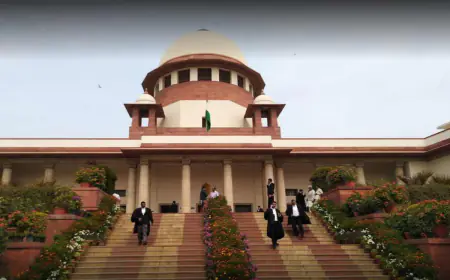
The Supreme Court has issued notice to the Central Government on petitions challenging the constitutional validity of the Digital Personal Data Protection (DPDP) Act, 2023. However, the apex court refused to grant an interim stay on the provisions of the Act. The bench stated that the matter involves complex and sensitive issues related to striking a balance between the right to information and the right to privacy, which require in-depth analysis.





The Supreme Court on Monday issued notice to the Centre on a plea challenging the constitutional validity of provisions of the Digital Personal Data Protection (DPDP) Act, 2023.
However, the apex court refused to grant an interim stay on the disputed provisions, arguing that an interim order could not be used to stay a provision that had been passed in Parliament until it was heard.
The bench, comprising Chief Justice Surya Kant and Justices Joymalya Bagchi and Vipul M Pancholi, referred three petitions by Venkatesh Nayak, a journalist Nitin Sethi, and the National People's Rights Campaign on behalf of a digital news outlet called The Reporters Collective, to the High Court.
The petitions raised concerns about the trust clauses, which allow the central government to obtain data from any trusted entity at its discretion. The bench observed that the matter involves complex and sensitive issues and involves striking a balance between two conflicting fundamental rights: the right to information and the right to privacy.