



























.jpeg)

























































Supreme Court Flags Builder Mafia’s Role in Sukhna Lake’s Decline
Chief Justice Surya Kant expressed concern over the drying up of Chandigarh's Sukhna Lake, blaming the collusion between the builder mafia and officials. He asked, "How much more will you dry up Sukhna Lake?" The Supreme Court is hearing interim applications filed in a 1995 public interest litigation. The court expressed shock at the damage being caused to the lake by illegal constructions and questioned the right to bring local issues directly to the Supreme Court.





On Wednesday, Chief Justice Surya Kant expressed concern over the drying up of Chandigarh's famous Sukhna Lake due to the collusion between the builder mafia and officials. He remarked, "How much more will you dry up Sukhna Lake?"
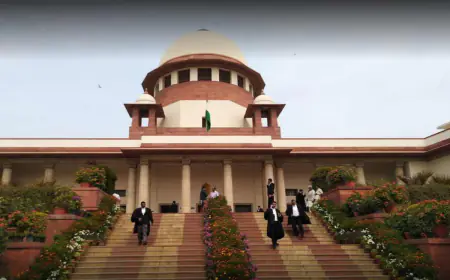
A bench comprising the Chief Justice, Justice Joymalya Bagchi, and Justice Vipul M. Pancholi was hearing interim applications filed in a pending 1995 public interest litigation titled "TN Godavarman Thirumulpad."
When a lawyer mentioned a petition related to the lake, Justice Surya Kant orally remarked, "How much longer will you dry up Sukhna Lake? Illegal construction is taking place in Punjab with the support of political institutions and the connivance and collusion of officials, which is completely ruining the lake. The entire builder mafia is operating there."