






























.jpeg)































































Antarctica’s ‘Blood Falls’: Why This Glacier Water Turns Blood-Red
In Antarctica's McMurdo Dry Valley, there's a unique waterfall called Blood Falls, whose water is blood-red. The reason for its red color remained a mystery to scientists for many years, but now it's been discovered. Its source is an ancient, saltwater lake hidden beneath a glacier for 2 million years, which explains its red color.


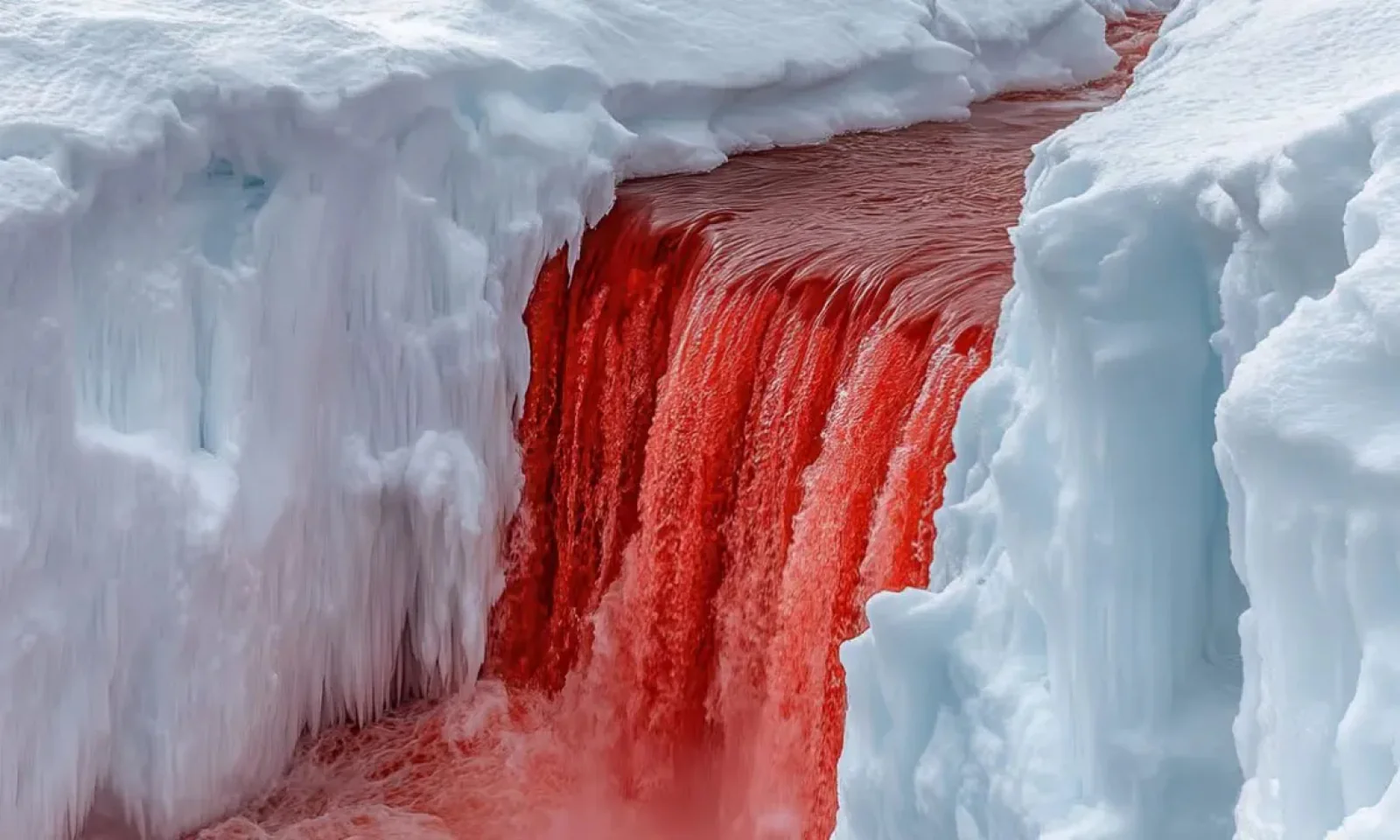


Amidst the cold climate and the white snow that surrounds Antarctica, there is something that is sure to send shivers down one’s spine. There is a waterfall falling from the Taylor Glacier in the McMurdo Dry Valleys, and the water is as red as blood. Its name is Blood Falls because of its red color. The reason for the red color of this waterfall was unknown to scientists for a long time, but now the reason has been discovered.
This bloody waterfall was first seen in 1911 by an Australian geologist named Thomas Griffith Taylor. At that time, it was surprising to see this stream of water with red color falling over the ice. It was thought that the color of the water was due to red algae. But with the advancement of science, the real and shocking truth about this waterfall came to be known.
Scientists discovered that the source of this waterfall is an ancient lake hidden beneath the Taylor Glacier. This lake has been completely cut off from the surface for the past two million years. Without light and oxygen, the water in this lake is much saltier than normal, making it resistant to freezing even in the extreme cold of Antarctica.