































.jpeg)



























































Space mirrors could illuminate Earth even on moonless nights with full-moon-like brightness
American startup Reflect Orbital claims to be able to bring sunlight to Earth at night. This will be possible through large reflective mirrors mounted on satellites, which will create a brightness similar to that of a full moon.
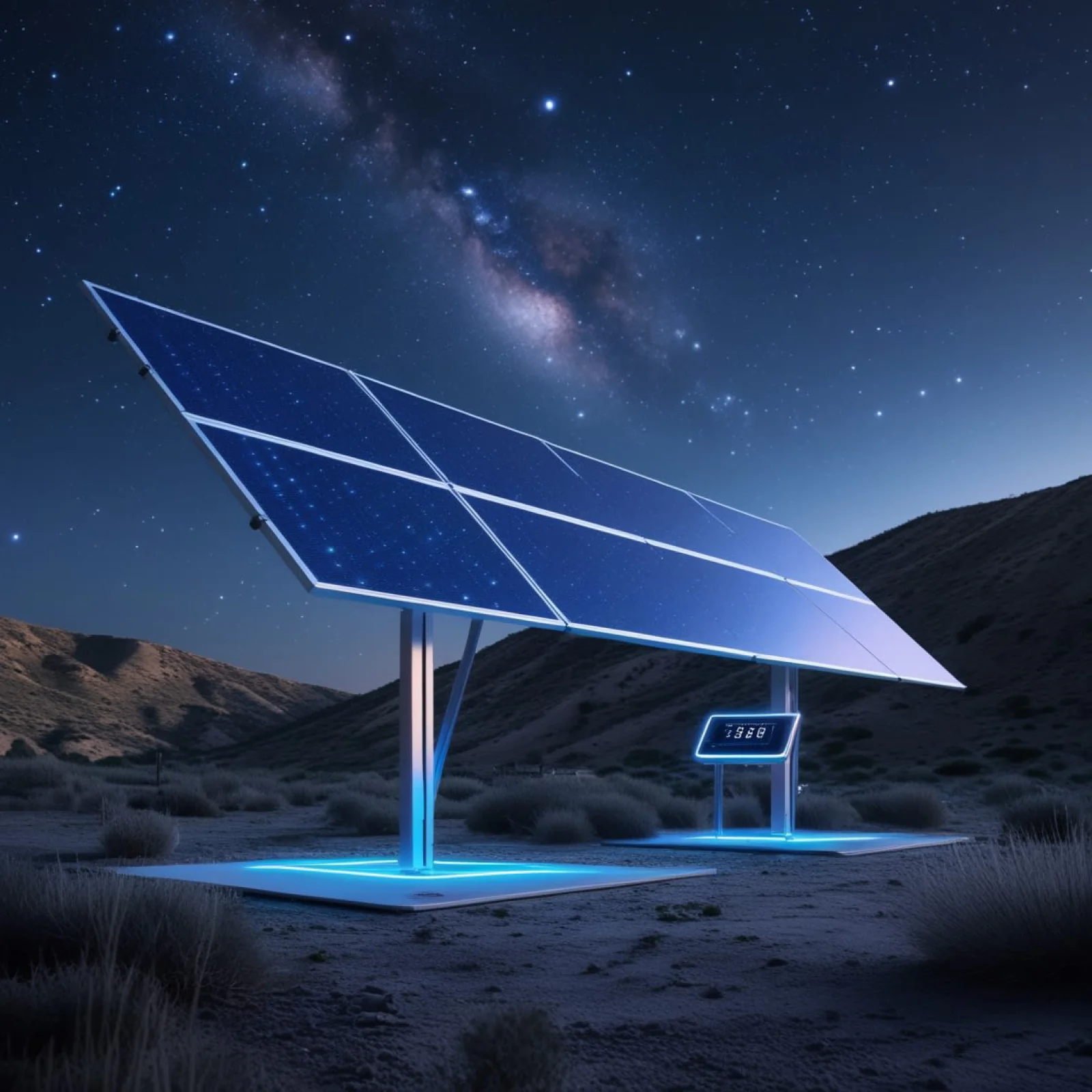
Now, the sunlight from space will be able to illuminate the Earth even on nights when there is no moon. An American startup called Reflect Orbital claims it will be able to provide sunlight to specific areas of the Earth at night through the placement of large mirrors on satellites.
The light will be like a full moon. "The startup claims that about 2.6 lakh people have already applied for this service. The cost of this service will be around $5,000 per hour, approximately Rs 4.5 to 4.7 lakh."
According to media reports, this California-based company plans to place satellites in sun-synchronous polar orbit. This orbit is approximately 600 to 625 kilometers above Earth, where satellites are constantly exposed to the Sun and move along the day-night boundary, called the terminator line.
Want to get your story featured as above? click here!
Want to get your story featured as above? click here!
The satellite will have a reflective mirror of 10 meters to 54 meters in width. It will be made of lightweight material like Mylar. It will open in space with a motorized system. The company plans to allow customers to illuminate specific areas by receiving specific coordinates (latitude and longitude) from customers through a mobile app or website.
However, this illumination will only be available for a limited period, as satellites in low Earth orbit move at very high speeds and can only illuminate a location for about four minutes at a time. To ensure continuous illumination, the company will launch thousands of satellites.
One satellite will be able to illuminate a circular area approximately five kilometers wide. The company estimates the brightness of the light to be between 0.8 and 2.3 lux, which would feel comparable to or slightly brighter than full moonlight, but not as bright as daylight.
This technology could be used in disaster zones, forests, maritime rescue operations, and search operations, where immediate lighting is difficult to provide. The company also plans its first prototype satellite, Erendil-1, to be launched to an altitude of approximately 640 kilometers.
It will have an 18-meter-wide mirror and will be able to illuminate an area of approximately 4.8 kilometers. Under its long-term plan, the company aims to establish a network of 1,000 satellites by 2028, 5,000 by 2030, and 50,000 by 2035.