


























.jpeg)

























































From Grand Mosques to Green Mountains: Discover Oman Beyond the Skyline
Oman stands apart in the Gulf by preserving low-rise architecture, rich heritage, and natural beauty. From the Sultan Qaboos Grand Mosque to the mountains of Jabal Akhdar, the country blends history, culture, and landscape without chasing skyscraper-driven modernity.
In contrast, other Gulf nations were engaged in a race to erect towering skyscrapers, whereas Oman pursued a different strategy. Oman tends to remain earthbound, rather than aiming for the skies. Just this, and you will not see much of towering buildings towering over the skyline of the country’s capital, Muscat. The skyline appears to be restricted to a height of seven or eight stories. Oman spreads the width of architecture rather than the height.
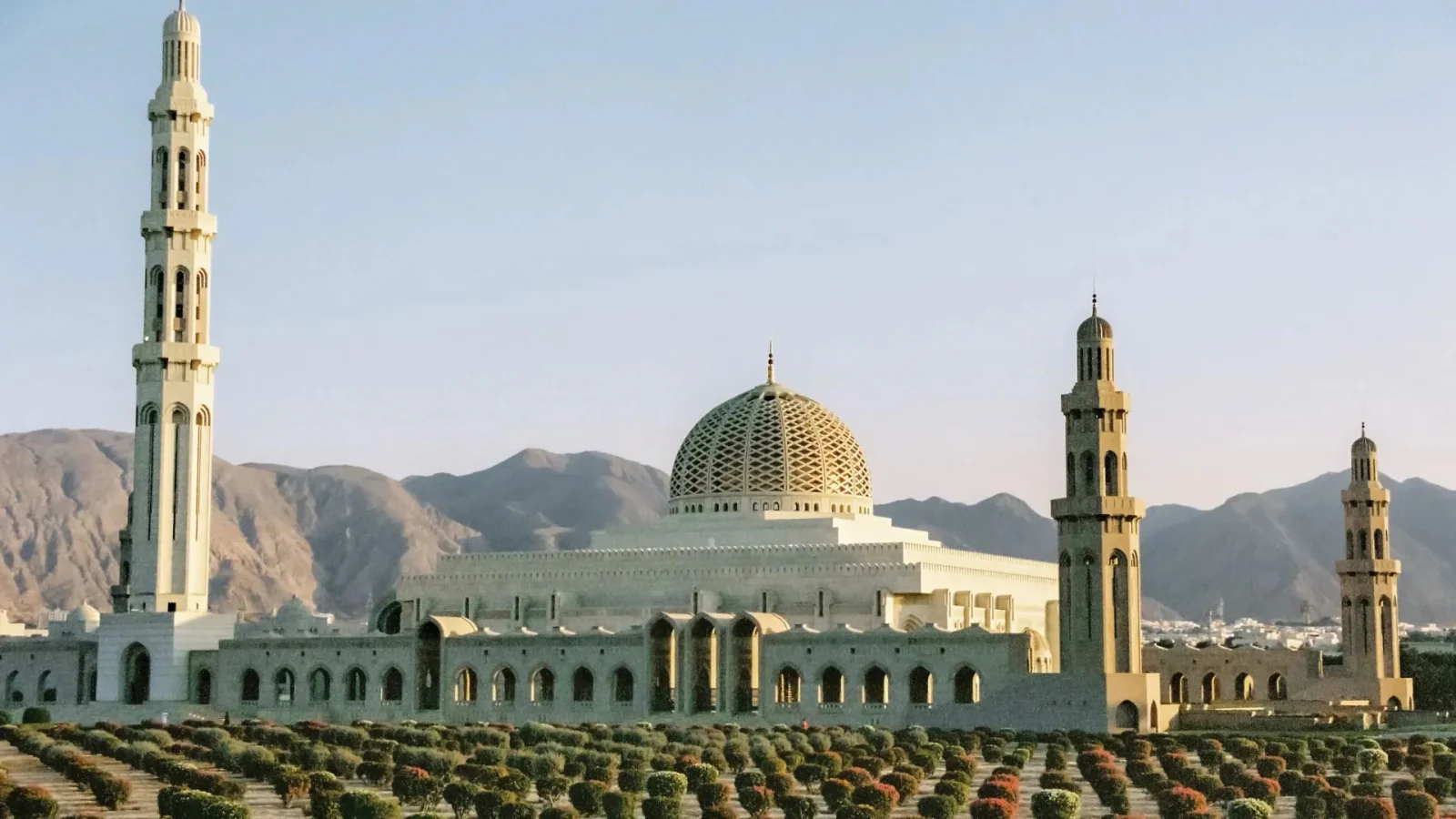
The SultanQaboos GrandMosque in Muscat is an architectural wonder. This mosque, named after former Sultan of Oman Qaboos bin Said al Said, covers 5,476 square meters of area. Even non-Muslims are allowed to enter.
It has a special significance and association in itself related to India. It was constructed using 300,000 tons of sandstone imported from India, sculpted by 200 artisans of India. Its main prayer hall can accommodate 6,500 people at a time.
Want to get your story featured as above? click here!
Want to get your story featured as above? click here!
Not only this, but the mosque also houses the world's second-largest chandelier. This crystal chandelier weighs 8.5 tons. It is so massive that cleaners have to enter inside to clean it to keep the crystals sparkling.
Oman's modern architecture is also remarkable. The Oman Across Ages Museum, located in Nizwa, an hour and a half from the capital, Muscat, is a testament to this. Its design, designed by the Australian firm Cox Architecture, is inspired by the jagged shape of Oman's Al Hajar mountains.
Completed in 2023, the museum spans 120,000 square meters. Its galleries showcase Oman's 800 million-year-old history in a captivating manner.
Oman's true magic lies beyond its buildings. A two-and-a-half-hour drive from Muscat lies Jabal Akhdar, also known as Oman's "Green Mountain." It rises over 3,000 meters in some areas. The country's highest peak, Jebel Shams, stands at 3,018 meters.
In contrast to Muscat's scorching heat, the climate here is Mediterranean-like. Winters can be so cold that snowfall is sometimes observed. Accessible only by four-wheel-drive vehicles, as the roads are steep and winding.
In Jabal Akhdar, there's a 500-year-old village called "The Suvgrah." Nestled on a cliffside, it still showcases Oman's ancient way of life. It's not accessible by car.
To reach the village, you have to park your car, descend 500 steps, cross a bridge, and then climb the hill on the other side. The climb isn't easy, but the views and food you get at the top make up for any fatigue.
The hills of Jabal Akhdar are filled with the scent of Damascus rose in the spring and summer months. These are picked up and distributed to Amouaz perfume manufacturers, which is renowned for manufacturing some of the costliest perfumes in the world. When you find yourself in Oman, do not forget to sniff out the smell of oud and musk sold in the markets of either Muscat or Nizwa.
Its location is in the southeast corner of the Arabian Peninsula. Its boundaries are shared with Yemen, Saudi Arabia, and the United Arab Emirates. Flight connectivity is available from various Indian cities to Oman. Oman Air, Indigo, and Air India Express are some of the carriers that have this connectivity. Flight duration is about 3.5 hours from Delhi and 3 hours from Mumbai to Muscat.