Why Fermentation is the Key to Perfect Dosa Batter
Introduction
There is nothing more comforting or satisfying than crisp dosa or soft and spongy idlis. Their uniqueness is not only the ingredients, but a magical process turning rice and lentils into a tasting, healthy base—fermentation. This is the old-fashioned method of food science that is deeply entrenched in Indian kitchens. Knowing the nature of fermentation can help us to perceive the reason behind the taste and feel of dosa batter.
What Really Happens During Fermentation
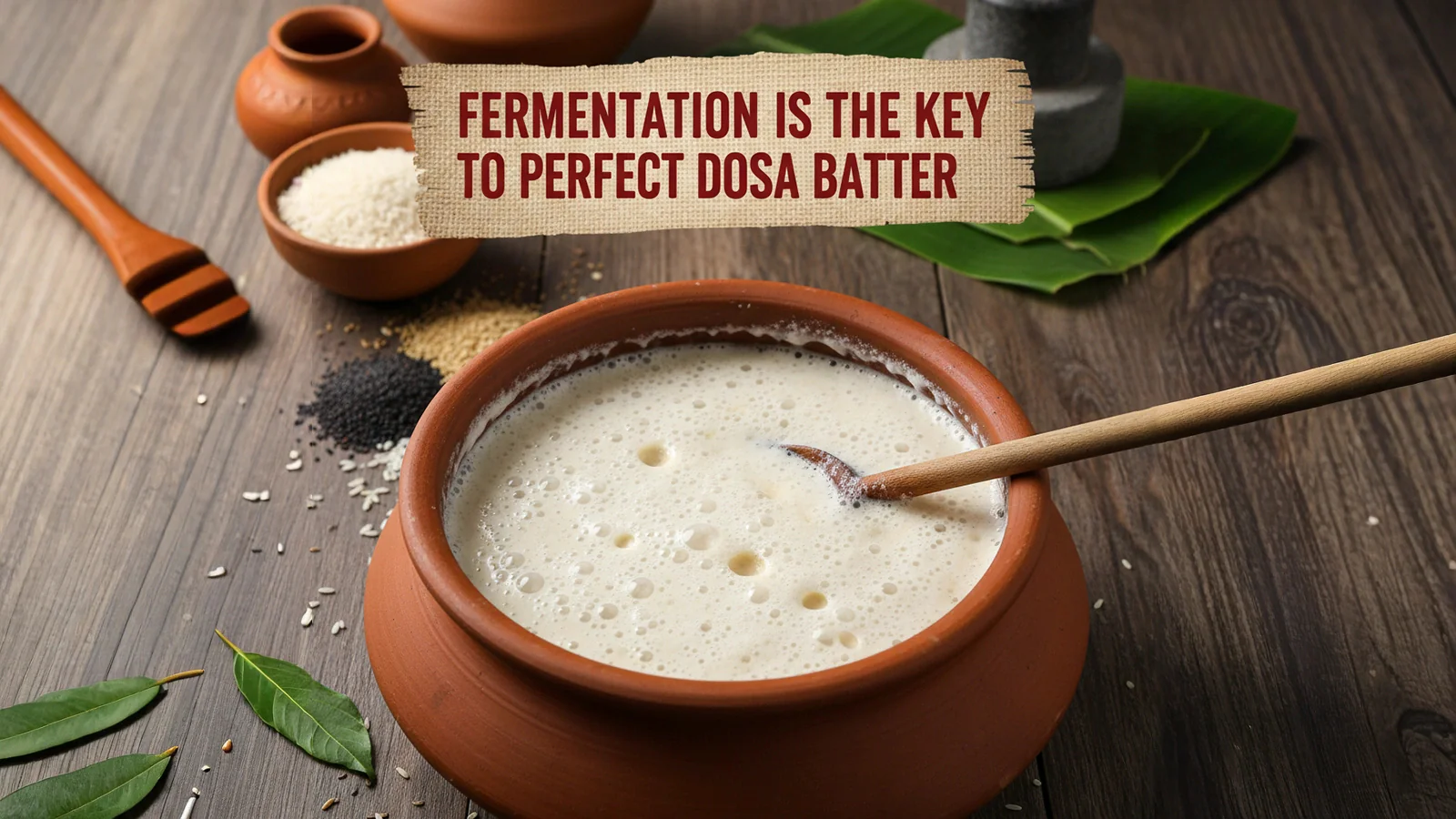
Fundamentally, fermentation is the activity of living organisms in nature, such as bacteria and yeast. Upon soaking, grinding and resting the rice and urad dal, these microorganisms begin feeding on the mixture of starch. As they work, they emit carbon dioxide. These gases are trapped in between, turning the dosa batter light and airy. It also results in lactic acid that creates a slight flavour change and enhances the texture.
Have you ever noticed the tang in a dosa or the sourness in an idli? The ingredients do not give this flavour—it is the result of fermentation. The natural sweetness of rice and the earthiness of lentils are balanced with lactic acid created during this process. The bubbles formed during fermentation create the crisp edges in dosas and the fluffy texture of idlis. Without this, the batter would remain flat, which makes the food dense and tasteless.
Fermentation improves food and increases the nutritional value of food. During fermentation, complex starches and proteins are broken down to simpler and easier-to-digest forms. The fermentation increases the provision of essential nutrients, including iron, zinc and B-vitamins. This is the reason why idli dosa batter has earned its place as a very nutritious food option over time- it is extremely light yet contains much food value.
Would you like to receive news updates on WhatsApp?
Another hidden benefit of fermented foods: gut health. These natural bacteria that grow in dosa batter are friendly. Their consumption promotes a healthy intestinal microbiome that is involved in digestion and immunity. It is said that fermented foods worldwide are associated with improved digestion. Dosa and idli are a perfect fit in this culture of food and health in India.
The Role of Climate and Care
Success in fermenting requires some factors. Temperature has an importance as fermentation is faster in a warm climate and slower in a cold one. This is why in certain areas the batter is left overnight, while in colder areas it might require additional warmth. Urad dal is a good source of protein as well as natural enzymes required in fermentation. Covering the dosa batter without an airtight container will help the batter to breathe and ferment.
Conclusion
The secret that dosa and idli possess is fermentation. It transforms plain grains into a nutritious, tasty meal which has been desired over centuries. Whenever you have a serving of dosa or idli, you will know how much science went into making it, how the microbes, friendly as they are, are bubbling and making food as nutritious as it is delicious.
ST Webdesk Verified Media or Organization • 13 Apr, 2026Editorial Desk
Sangri Today is a News Media website that covers the latest news in National, Politics, Rajasthan, Crime, Sports, Entertainment, Lifestyle, Business, Technology, and many more categories.





























.jpeg)