Why Biscoff's India Launch Is a Masterclass in How Not to Enter a Premium Market
When affordability trumps authenticity, even beloved global brands can lose their soul and their credibility
The Biscoff story isn't just about a biscuit tasting different. It's about a strategic miscalculation that reveals how even sophisticated global brands can misread India's evolving consumer landscape. In their rush to capture market share through aggressive pricing, Biscoff may have sacrificed the very thing that made Indian consumers want them in the first place.
The Premium Brand That Went Mass Market
Biscoff's Indian journey represents a fundamental identity crisis. For nearly two decades, the brand existed in India as pure aspiration: expensive, rare, European. It wasn't positioned as premium; scarcity did that naturally. Indian consumers built emotional connections to Biscoff not despite its inaccessibility, but partly because of it.
When the brand launched locally with ₹10 packs competing directly with Parle and Britannia, it made a calculated bet: that volume would compensate for any perception loss. But this strategy ignored a crucial insight. Biscoff fans weren't looking for another affordable biscuit option. India has plenty of those. They wanted Biscoff.
Influencers Mumbaikar Nikhil and Sahil Khattar have documented what appears to be a significant gap between corporate strategy and consumer expectation. Both their videos reveal the same pattern: consumers feel the Indian product doesn't deliver the experience that created demand in the first place.
Nikhil's observation that he feels "betrayed" by the Indian version captures something deeper than product preference. It suggests a broken promise. Sahil Khattar's blind taste tests, where participants consistently identified the Indian variant as inferior and described it as a "regular glucose biscuit," demonstrate that the quality difference isn't subjective nostalgia. It's measurable and immediate.
The question isn't whether Biscoff could make a cheaper version for India. Clearly, they could and did. The question is whether they should have, given what their brand represented.
The False Choice Between Quality and Accessibility
Biscoff's strategy seems to rest on an outdated assumption: that Indian consumers want low prices more than authentic experiences. But India's premium segment is growing faster than any other. Urban Indians now spend readily on craft coffee, artisanal chocolate, imported cheese, and premium alcohol. They're not afraid of paying for quality.
What Khattar's video participants articulated clearly is that they understand value. They don't expect a ₹10 biscuit to match a ₹50 imported one ingredient for ingredient. But they do expect honesty about what they're getting. As one person noted, "If I wanted a ₹10 glucose biscuit, I'd buy one. I buy Biscoff for the Biscoff taste."
This reveals the strategic error. Biscoff could have entered India as a premium product at premium prices, catering to the millions who already knew and loved the brand. Instead, they chose mass-market accessibility and in doing so, created a product that satisfies neither segment well. It's too expensive to compete with Parle on value, too compromised to satisfy existing fans on quality.
The Opportunity Cost of Cost-Cutting
Every visible compromise (the thinner biscuit, the lighter color, the reduced caramelization, the muted spices) represents a strategic choice to prioritize affordability. Food manufacturing experts suggest these changes likely involve cheaper flour, less butter, reduced spice content, and shorter baking times. Each cut saves fractions of rupees per unit. Multiplied across millions of biscuits, those savings become significant.
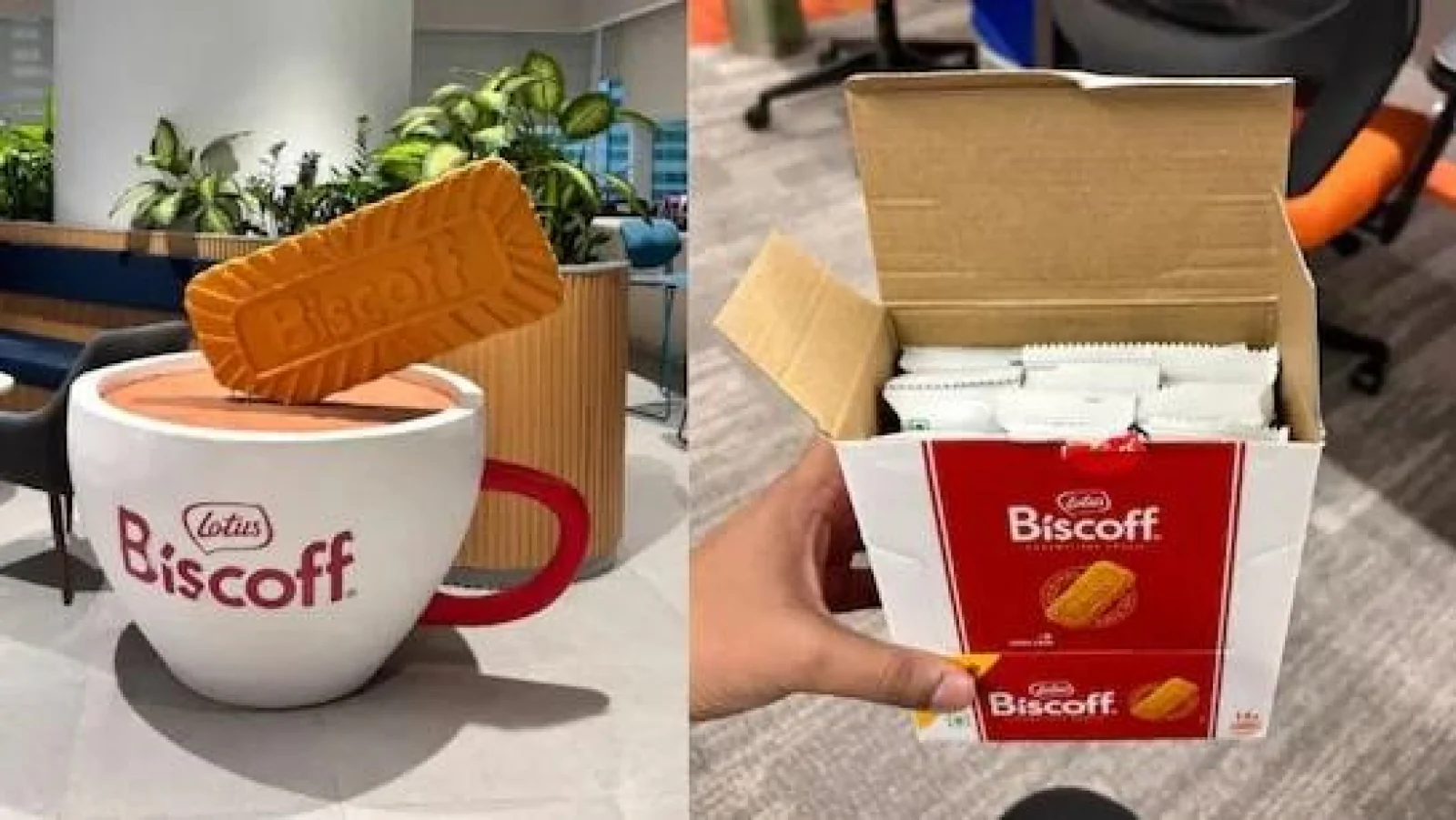
But what's the cost? Nikhil pointed out that the international version is "noticeably bigger and richer" while the Indian one "lacks the signature caramelised depth that built the brand's reputation." That depth, that richness? Those were Biscoff's differentiators. Without them, it's just another caramel-flavored biscuit in a crowded market.
The cost-cutting may have hit financial targets, but it's created a reputational problem that no amount of marketing can fix. When your core audience (the people who loved you enough to create demand) publicly states they feel betrayed, you've traded short-term market penetration for long-term brand erosion.
What Biscoff Could Have Done Differently
Consider an alternative strategy. Launch in India with two clear product lines: a premium "Belgian Original" at ₹40-50, imported or made to exact international specifications, and an "India Edition" at ₹15-20, transparently positioned as adapted for local production with clear communication about what's different.
This approach respects consumer intelligence. It acknowledges that different price points deliver different experiences. It gives loyal fans access to what they actually want while offering a more accessible entry point for curious new consumers. Most importantly, it doesn't deceive anyone.
Several global brands successfully execute this strategy. Apple sells the same iPhones worldwide at locally adjusted prices. Starbucks maintains coffee quality standards globally while adjusting food menus regionally. These brands understand that their equity lies in delivering consistent core experiences, even if accessibility varies by market.
The Brand Trust Equation
Khattar's conclusion ("One World, One Quality") isn't a naive demand for identical pricing everywhere. It's a call for brand integrity. If your packaging looks identical, if your marketing uses the same imagery and language, if you're claiming "Original Caramelised Biscuit" in the same fonts and colors, consumers reasonably expect comparable products.
The disconnect between packaging promise and product delivery is where trust breaks down. Nikhil articulated this when he questioned whether global brands view Indian consumers as deserving the same quality standards. It's not about nationalism. It's about whether brands see Indians as sophisticated consumers or as a volume market where compromises won't be noticed.
The Digital Age Factor
Twenty years ago, Biscoff might have gotten away with this strategy. Product variations across markets were harder to verify. Consumer conversations were limited to friend groups. Disappointed customers simply stopped buying.
Today, every quality compromise is documented, compared, and broadcast to millions. Nikhil and Khattar's combined reach exceeds many traditional media outlets. Their content is permanent, searchable, and shared. New consumers researching Biscoff will encounter these comparisons before making their first purchase.
What Happens Now
Biscoff faces a choice that will define its Indian trajectory. Acknowledge the quality gap and adjust (either improve the Indian formulation or transparently reposition it as a different product line). Or maintain the current course and accept that a significant portion of the target audience will remain skeptical or actively critical.
The first option requires investment and humility. The second option is cheaper in the short term but potentially catastrophic for long-term brand building in a market that matters increasingly on the global stage.
The Biscoff case ultimately isn't about one brand's missteps. It's a signal to every global company eyeing India: this market has evolved. Indian consumers are informed, vocal, and unforgiving of perceived disrespect. They'll pay premium prices, but only for premium experiences. They'll accept localization, but only with transparency.
The days of viewing India as a price-sensitive mass market where quality can be quietly compromised are over. Brands that haven't adjusted their strategies accordingly will learn this lesson the hard way, one disappointed consumer video at a time.
ST Webdesk Verified Media or Organization • 13 Apr, 2026Editorial Desk
Sangri Today is a News Media website that covers the latest news in National, Politics, Rajasthan, Crime, Sports, Entertainment, Lifestyle, Business, Technology, and many more categories.































.jpeg)