






























.jpeg)



































































Stone That Sings: Vittala Temple Amazes World with Musical Pillars and Stone Chariot
The Vittala Temple in Karnataka stands as a remarkable example of ancient Indian architecture. Famous for its musical pillars and iconic stone chariot, the UNESCO World Heritage site continues to amaze visitors and scientists with its blend of art, engineering, and spiritual significance.


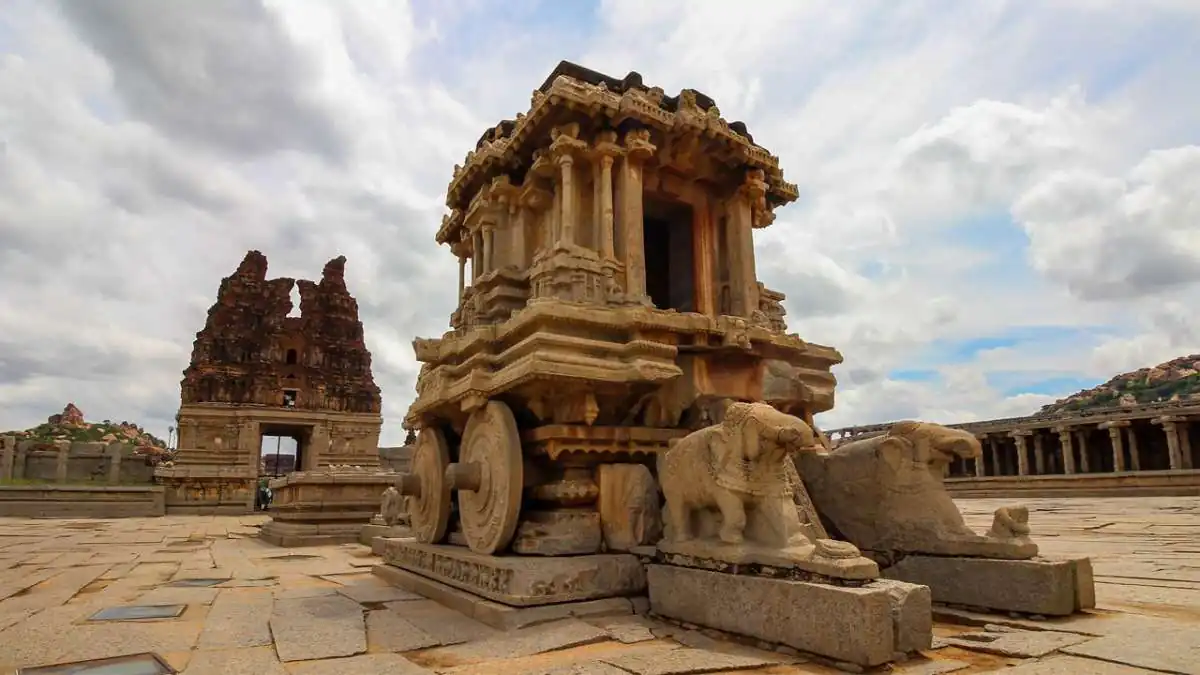


Indian ancient architecture is not merely a combination of brick and stone but a unique fusion of science, art, and spirituality. The best example of this is the Vitthala Temple, or Vijaya Vitthala Temple, in Hampi, Karnataka. Situated on the Tungabhadra River's bank, this UNESCO World Heritage site is renowned globally for its remarkable craftsmanship. The temple features musical pillars that produce melodious sounds. Let's explore this extraordinary monument further.
Constructed in the 15th century during King Devaraya II's rule of the Vijayanagara Empire, the temple was later enhanced by the great King Krishnadevaraya. It is dedicated to Lord Vitthala, an incarnation of Lord Vishnu. The carvings on the walls still seem alive.
The first striking sight upon entering the complex is the massive stone chariot, one of three famous stone chariots in India. Its design appears so precise that from a distance, it looks like carved from a single monolithic stone, but it is actually assembled from large granite blocks. Despite suffering damage during the Vijayanagara Empire's decline, it still embodies grandeur.
The most notable feature of the Vitthala Temple is its 56 musical pillars, known as Saregama pillars, located in the Mahamandapa (great hall). When lightly tapped, these pillars emit sounds resembling the seven musical notes. Carved from a single solid granite piece, they are surrounded by seven smaller pillars, each producing a different musical instrument's sound.