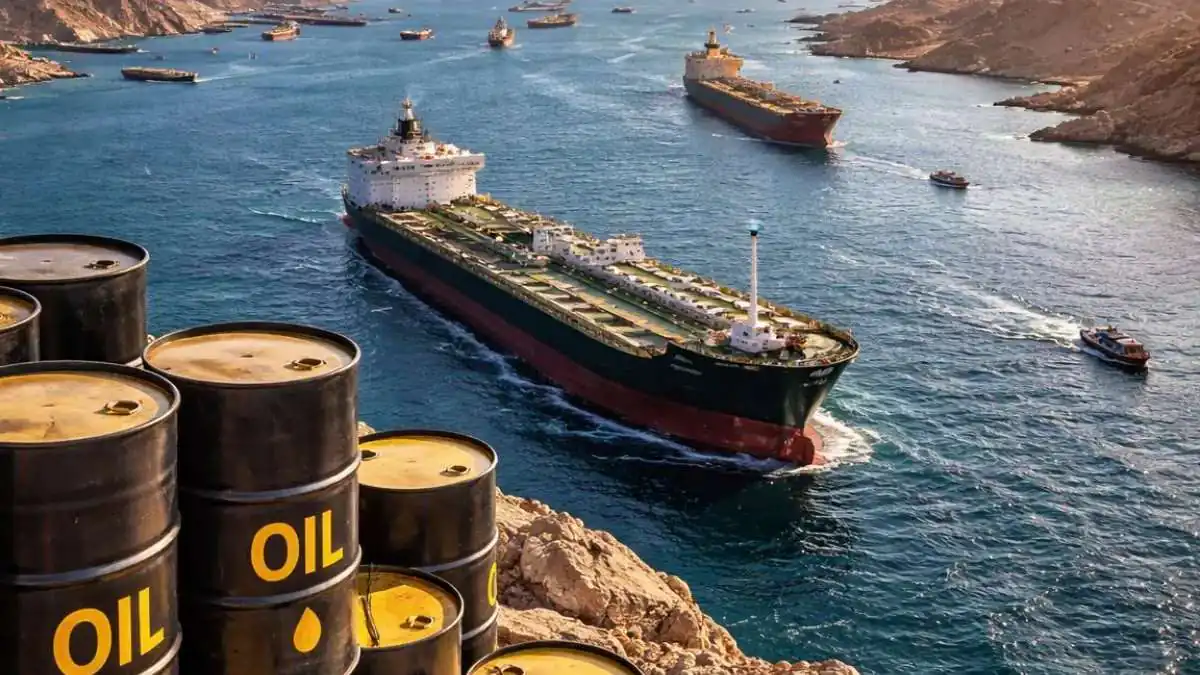
Oil Prices Surge Past $125 as Supply Crunch Overshadows Easing War Tensions
West Asia Crisis: Amidst fears of an escalation of the Iran war, Brent crude prices have surpassed $126 per barrel. The primary reason for this is a significant reduction in oil supply through the Strait of Hormuz.
Muskan Kumawat Verified Local Voice • 13 Apr, 2026Journalist
May 1, 2026 • 2:09 PM
B
Business
NEWS CARD
“Oil Prices Surge Past $125 as Supply Crunch Overshadows Easing War Tensions”
Read more onwww.sangritoday.com/s/247fff
1 May 2026
https://www.sangritoday.com/s/247fff
Copied
Oil Prices Surge Past $125 as Supply Crunch Overshadows Easing War Tensions
During the peak of the war, the price of crude oil did not spike dramatically either. With ongoing negotiations and decline in conflict intensity, however, the price of Brent crude has now surpassed $126 per barrel. This is not inconsistent. The oil market operates on the basis of supply considerations, and not noises of war.
On Thursday, the price of Brent crude exceeded the mark of $125 per barrel. June Brent crude increased by 6.2% to $125.36 per barrel, while July Brent increased by 3.1%. In contrast, before the conflict had broken out, the price of Brent stood at around $70 per barrel at the end of February. Brent rose to $126.41 during the day, though it later slipped to around $115.98.
The real reason is the Strait of Hormuz. It is one of the most sensitive maritime arteries in the world's oil trade. According to the International Energy Agency (IEA), before the crisis, more than 20 million barrels of crude oil, NGLs, and refined products flowed through Hormuz daily. By early April, this had dropped to just 3.8 million barrels per day. Exports through alternative routes did increase to 7.2 million barrels per day, but the total export loss still exceeds 13 million barrels per day.
Referring to this figure, Ajay Kedia, head of Kedia Commodity, says this is what has unsettled the market. Even if the war stops, ships won't start sailing immediately. It will take time for insurance, routes, ports, loading, and refinery supply chains to return to normal. This is what is troubling the crude oil market. In a recent Reuters poll, analysts said that even if peace talks progress, exports from the Middle East will only resume slowly. For this reason, the average Brent price forecast for 2026 has been raised to $86.38 per barrel.
When we spoke with Ravindra Rao, founder of Arthvriksha Financial Services, to find out the second major reason for this surge in oil prices, he explained that crude prices are strengthening due to supply disruptions. He said that Trump has clearly stated that the naval blockade on Iran will continue until Iran reaches a nuclear deal, which is severely impacting oil supply. Rao says that when the market knows that oil is not available right now, contracts for delivery today become the most expensive. Refineries and traders need oil now, so they are willing to buy at any price; they cannot wait until June or July. Additionally, the United Arab Emirates abruptly left OPEC, further increasing market uncertainty and weakening supply conditions.
Would you like to receive news updates on WhatsApp?
IEA data shows that global oil reserves fell by 85 million barrels in March. Stocks outside the Middle East Gulf fell by a significant 205 million barrels. Oil in transit also declined. According to the IEA, oil on water fell by 107 million barrels, as the Strait of Hormuz was virtually closed, reducing oil in transit by 181 million barrels.
US data tells a similar story. US Department of Energy (EIA) data shows that US crude stocks fell by 6.2 million barrels to 459.5 million barrels in the week ending April 24. Meanwhile, according to data from the American Petroleum Institute, US stocks fell by 1.7 million barrels. US crude exports reached a record 6.44 million barrels per day as Europe and Asia purchased US oil to offset shortages in the Middle East. Gasoline stocks fell by 6.1 million barrels and distillate stocks by 4.5 million barrels.
This means the market isn't just filled with fear, but actual barrels are also scarce. Investors initially believed the impact of the war would be limited. Now, they believe disruptions to Hormuz, shipping, and refinery supplies could be prolonged. In its April forecast, the EIA raised the average Brent price for 2026 to $96 per barrel. The agency estimates that Brent could peak around $115 per barrel in the second quarter, and that a risk premium will persist due to supply uncertainty.
This is an even greater concern for India. India's import dependence on crude oil is over 88%. Therefore, the surge in crude oil prices isn't just market news for India. It also poses risks related to the import bill, the rupee, petrol and diesel prices, freight, and inflation. While the war noise may seem to be subsiding, the oil market doesn't seem to be opening up just yet. And when the road is closed, stocks are dwindling and buyers are rushing to alternative oil, crude oil moves not on the news of the talks but on the reality of supply.
































.jpeg)