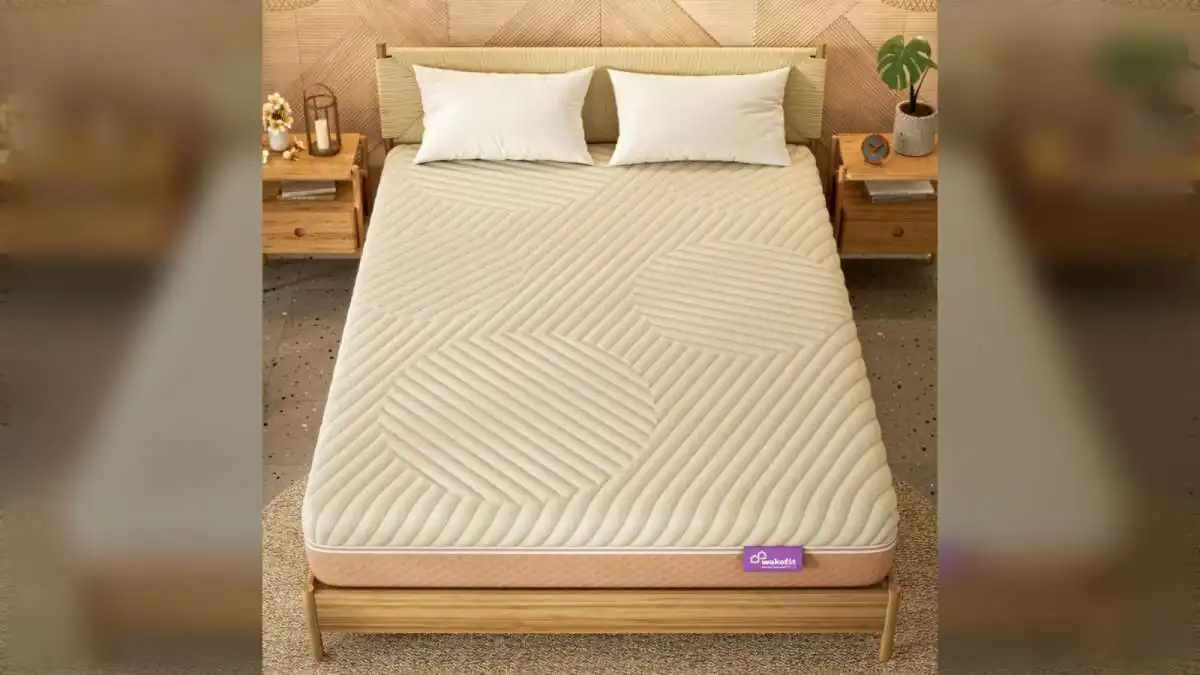
Layer count determines whether the mattress can balance pressure relief and support simultaneously. A single-layer mattress cannot do both well. A 3-layer construction - comfort layer, transitional middle layer, high-density base - allows each layer to be optimised for a different function. You pay for each distinct layer in manufacturing cost, and you feel the absence of it at the 12-month mark.
Why do two mattresses at the same price perform so differently after two years?
The answer is almost always the density-firmness confusion combined with one specific manufacturing shortcut: the bonded foam base.
Bonded foam (rebonded foam) is made by compressing recycled foam scraps under heat and pressure. It produces a dense-feeling block that holds its shape adequately in the first year and compresses unevenly after that - because the density is inconsistent throughout the material. Rebonded bases are widely used in mattresses priced Rs 8,000-14,000. They feel firm and supportive initially. Uneven compression appears at year two as valley-shaped impressions at the heaviest contact points: hips and shoulders.
The second trap is the memory foam label at sub-threshold density. A mattress marketed as memory foam with a comfort layer at 35-40 kg/m3 functions well for the first 18 months, then begins compressing. High-density memory foam is 52 kg/m3 and above. Below that threshold, the material is technically memory foam but behaves like standard PU foam in terms of durability. This is the most common complaint pattern for mattresses in the Rs 10,000-15,000 range: felt perfect for the first year, started dipping by year two.
What does each double bed mattress price bracket actually deliver in verified specifications?
|
Price Range
|
Foam Type
|
Base Density
|
Expected Lifespan
|
Right For
|
|
Rs 6,000-10,000
|
PU foam / rebonded base
|
28-32 kg/m3
|
2-3 years
|
Spare room, occasional use only
|
|
Rs 10,000-18,000
|
High-density PU or entry memory foam
|
40-52 kg/m3
|
5-8 years
|
Regular use, one adult primary bedroom
|
|
Rs 18,000-30,000
|
Layered memory foam (52-65 kg/m3)
|
52-65 kg/m3
|
8-12 years
|
Daily use, couples, primary bedroom
|
|
Rs 30,000+
|
Premium memory foam, latex, or hybrid
|
65+ kg/m3
|
12-20 years
|
Heavy use, medical needs, long-term value
|
The most common mismatch is buying at Rs 10,000-14,000 with a 10-year expectation. Most mattresses in this bracket use memory foam in the label but PU foam in the base, with a thin memory foam comfort layer on top. The comfort layer compresses within 18-24 months. The base layer, being standard PU, cannot compensate. Result: a mattress that felt right at purchase and performs poorly by month twenty.
Which double bed mattress claims justify a price premium and which do not?
Orthopaedic is not a medical certification in India. It indicates firmer construction: higher-density base, thinner comfort layer. This benefits back sleepers above 75 kg. It does not benefit side sleepers of any weight, because the firmness prevents the shoulder from sinking to allow neutral spinal alignment. The orthopaedic label is a construction description, not a prescription.
Cooling gel foam measurably reduces surface temperature compared to standard memory foam in controlled tests. In Indian conditions without air conditioning, it reduces heat discomfort but does not eliminate it. In air-conditioned rooms, there is no practical difference between gel foam and standard high-density memory foam at the same density. The price premium for cooling gel is justified if you sleep without AC in a warm climate; it is cosmetic if you sleep in a cooled room.
Dual comfort is a legitimate feature for couples with different firmness preferences - but only if the two sides have documented density differences. If the brand cannot provide density values for each side, the feature is cosmetic. A genuinely dual-comfort mattress should have a measurable difference in ILD (Indentation Load Deflection) between the two sides, which a real spec sheet will show.
What should you confirm before paying for a double bed mattress?
Ask for the spec sheet density values. Any brand that has built the mattress to a specification will have the numbers. Ask specifically: what is the density in kg/m3 of the base layer? What is the density of the comfort layer? A brand that responds with terms like premium orthopaedic or high-resilience without a number is not able to guarantee what is inside.
Confirm the internal frame dimensions before ordering. Standard double bed mattresses in India are 72 x 48 inches. Some brands list their "double" as 75 x 48. Confirm the mattress dimension matches your frame exactly - not just the size name. A 3-inch mismatch may not matter on an open platform bed; it creates a visible gap or forced fit on a bed with raised side rails.
A double bed mattress bought on density specification and confirmed layer construction will outlast its brand marketing by years. For a range where foam density and layer count are listed per product so you can compare on specification rather than on comfort label, the mattress price range at Wakefit covers double sizes in PU foam, high-density memory foam, and orthopaedic variants starting from Rs 6,399.






















































%20(1).jpg)