







































.jpg)








Navrachana University Hosts AI DAY 2026 to Promote Practical Understanding of Artificial Intelligence
Navrachana University hosts AI Day 2026 to foster practical understanding of Artificial Intelligence Vadodara (Gujarat) [India], February 24: At a time when Artificial Intelligence is being discussed at the highest national forums, Navrachana University’s Centre for Interdisciplinary Computing Science (CICS), in collaboration with AtliQ Technologies, hosted AI DAY 2026 — a full-day initiative aimed at [...]



Navrachana University hosts AI Day 2026 to foster practical understanding of Artificial Intelligence
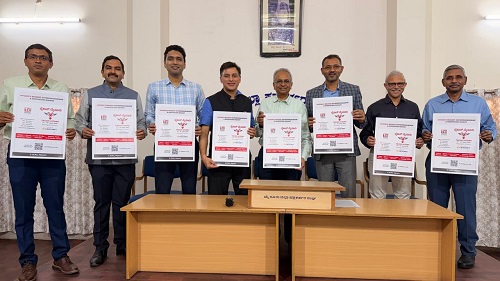
Vadodara (Gujarat) [India], February 24: At a time when Artificial Intelligence is being discussed at the highest national forums, Navrachana University’s Centre for Interdisciplinary Computing Science (CICS), in collaboration with AtliQ Technologies, hosted AI DAY 2026 — a full-day initiative aimed at fostering practical understanding and informed adoption of AI. The event, themed AI Beyond Theory, focused on separating measurable value from hype and encouraging clarity-led implementation.
Held from 8:00 AM to 6:00 PM at the Navrachana University campus, the event witnessed participation from more than 200 founders, business owners, technology leaders, engineers, analysts, and students. Rather than limiting the engagement to tool demonstrations, the sessions addressed critical implementation questions — where AI delivers measurable impact, where automation suffices, how organisations should assess return on investment, and how to avoid unnecessary complexity.
The keynote sessions were conducted in association with AtliQ Technologies and Codebasics. Dhaval Patel, co-founder of Codebasics and a widely followed data and AI educator with over 1.4 million subscribers on YouTube, led the sessions. Emphasising clarity over complexity, he highlighted that sustainable AI adoption begins with foundational understanding and structured thinking rather than pursuing advanced tools without context. The sessions focused on practical use cases, structured decision-making frameworks, and measurable outcome-oriented implementation approaches.