




































.jpg)














Breakthrough “Directional Lead” Deep Brain Stimulation Surgery at Sterling Hospital Unlocks New Possibilities for Parkinson’s Patients
Gujarat’s Multispeciality hospital improves the quality of life of a 59-year-old patient by performing the Groundbreaking “Directional Lead” Deep Brain Stimulation Surgery to Transform Parkinson’s Disease Management in India Ahmedabad (Gujarat) [India], July 25: Sterling Hospitals, a pioneer in healthcare excellence, proudly announces a momentous milestone in the field of functional neurosurgery – the successful implementation of a [...]


Gujarat’s Multispeciality hospital improves the quality of life of a 59-year-old patient by performing the Groundbreaking “Directional Lead” Deep Brain Stimulation Surgery to Transform Parkinson’s Disease Management in India
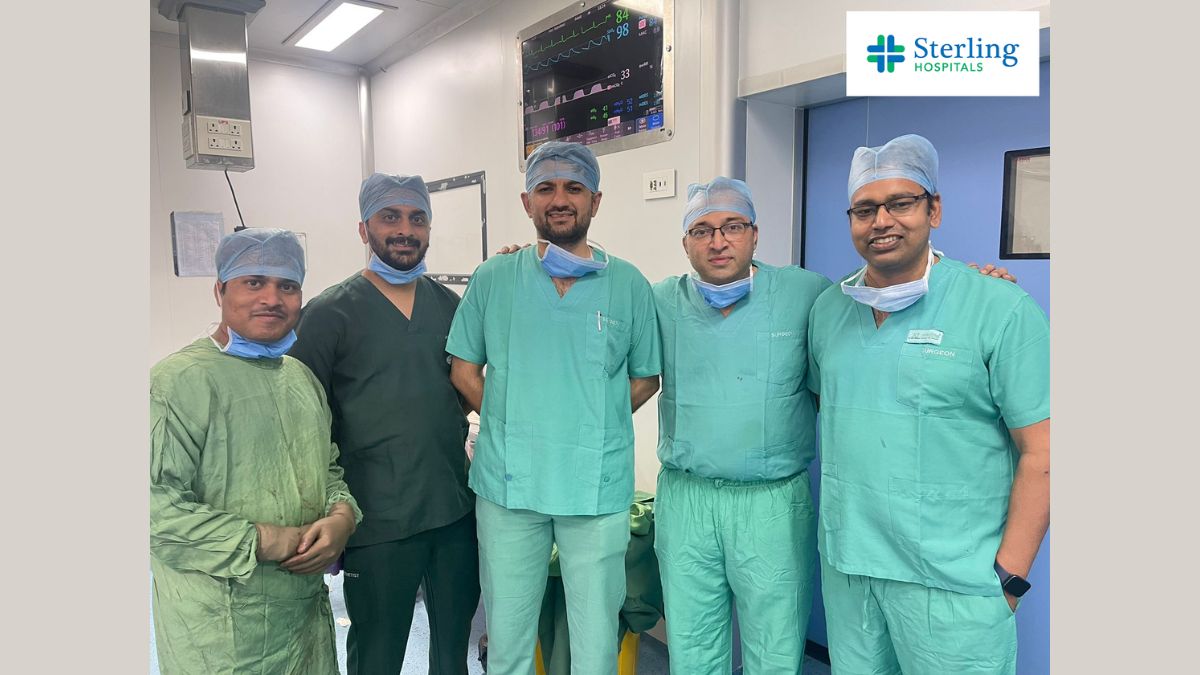
Ahmedabad (Gujarat) [India], July 25: Sterling Hospitals, a pioneer in healthcare excellence, proudly announces a momentous milestone in the field of functional neurosurgery – the successful implementation of a revolutionary “Directional Lead” Deep Brain Stimulation (DBS) surgery for the very first time in Gujarat for managing advanced Parkinson’s disease. Sterling Hospital contributed to improving the quality of life of a 59-year-old gentleman who had been suffering from Parkinson’s disease for the last 9 years with significant motor fluctuations and abnormal dancing movements due to overdosing on medications. This groundbreaking surgery, conducted under the care of renowned Neurologist and Movement Disorders Specialist Dr. Mitesh Chandarana, marks a significant advancement in Parkinson’s disease management.
Parkinson’s disease, a degenerative brain disorder, presents a significant challenge to patients with its increasingly debilitating symptoms, including hand and leg tremors, stiffness, slowed movements, difficulty walking, and other systemic issues. In India, Parkinson’s disease occurs in approximately 120-180 people per 100,000 population, affecting a staggering one million individuals, a number which may yet be a pale shadow considering the potential of significant underdiagnosis and misdiagnosis.